
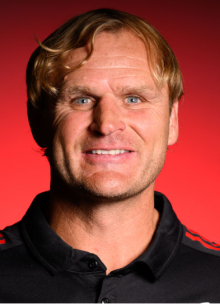
Scott Robertson
Scott Robertson

Scott Robertson

NZ All Blacks Rugby Coach

Scott Robertson is the All Blacks Head Coach.

Scott Robertson, affectionately known as “Razor,” is one of New Zealand rugby’s most charismatic, innovative, and successful coaches—an individual whose unique approach to leadership has transformed teams and inspired players across all levels of the game. A former All Black turned championship-winning mentor, Scott has earned a reputation for combining tactical intelligence with humility, flair, and an infectious energy that has made him a beloved figure in rugby circles worldwide.

Born in Tauranga, Scott Robertson grew up in a rugby-loving family and quickly found his footing in the sport. He attended Mount Maunganui College before moving to Christchurch, where he joined Sumner Rugby Club and began progressing through the Canterbury rugby system. With a strong work ethic, athleticism, and a knack for leadership, Scott established himself as a dynamic loose forward—capable of covering all three back row positions but most effective at flanker.

He made his provincial debut for Bay of Plenty in 1994 before moving to Canterbury, where he became a key figure in their successful National Provincial Championship campaigns. In Super Rugby, Scott represented the Crusaders, one of the competition’s most dominant teams. He played 86 matches for the Crusaders from 1996 to 2003, contributing to multiple championship-winning seasons with his strong defence, physical presence, and high rugby IQ.

Scott earned his first All Blacks cap in 1998 against Australia. Over the course of his international career, he played 23 Tests for New Zealand and was a part of several significant victories, including Tri Nations campaigns. While he never played in a Rugby World Cup, his contributions to the All Blacks during a competitive era were deeply respected. His international career concluded in 2002, and he later played overseas in France and Japan before retiring as a player in 2007.

However, it was in coaching that Scott Robertson would truly find his calling—and ultimately redefine success in New Zealand rugby. After gaining experience coaching Sumner at the grassroots level and then working within the Canterbury and New Zealand U20 setups, Scott took the reins as head coach of Canterbury in 2013. He guided the team to three consecutive NPC titles, showcasing his ability to connect with players and build winning cultures.

In 2017, he was appointed head coach of the Crusaders. What followed was one of the most dominant coaching tenures in Super Rugby history. Under his leadership, the Crusaders won seven consecutive Super Rugby titles from 2017 to 2023—an unprecedented run that re-established the franchise as a global benchmark for high-performance rugby. Razor’s teams were known not just for their clinical execution and relentless defence but also for their creativity, cohesion, and strong culture.

A large part of Scott’s success has stemmed from his distinctive coaching style. He is known for his openness, his ability to create genuine bonds with his players, and his belief in allowing individuals to express themselves. His post-match breakdancing celebrations became iconic—symbols of a coach who could balance elite professionalism with unfiltered joy and authenticity. Players regularly credit him with bringing out the best in them, not just through tactics but through belief, support, and trust.

In 2023, Scott Robertson was officially appointed head coach of the All Blacks, set to take over following the 2023 Rugby World Cup. The announcement was met with widespread approval, both in New Zealand and abroad, as many had long viewed him as a natural successor to lead the national team. His ability to develop young talent, manage pressure, and adapt his style to evolving trends in world rugby made him the ideal candidate to take the All Blacks into a new era.

Off the field, Scott Robertson speaker, legend and super coach is widely respected for his humility, emotional intelligence, and commitment to community. Despite his immense success, he remains grounded and approachable, with a focus on developing people as much as players. He speaks often about the importance of authenticity, balance, and fun in high-performance environments. His leadership philosophy, shaped by years of experience as both player and coach, is centred on connection, clarity, and culture.

Scroll to Top